
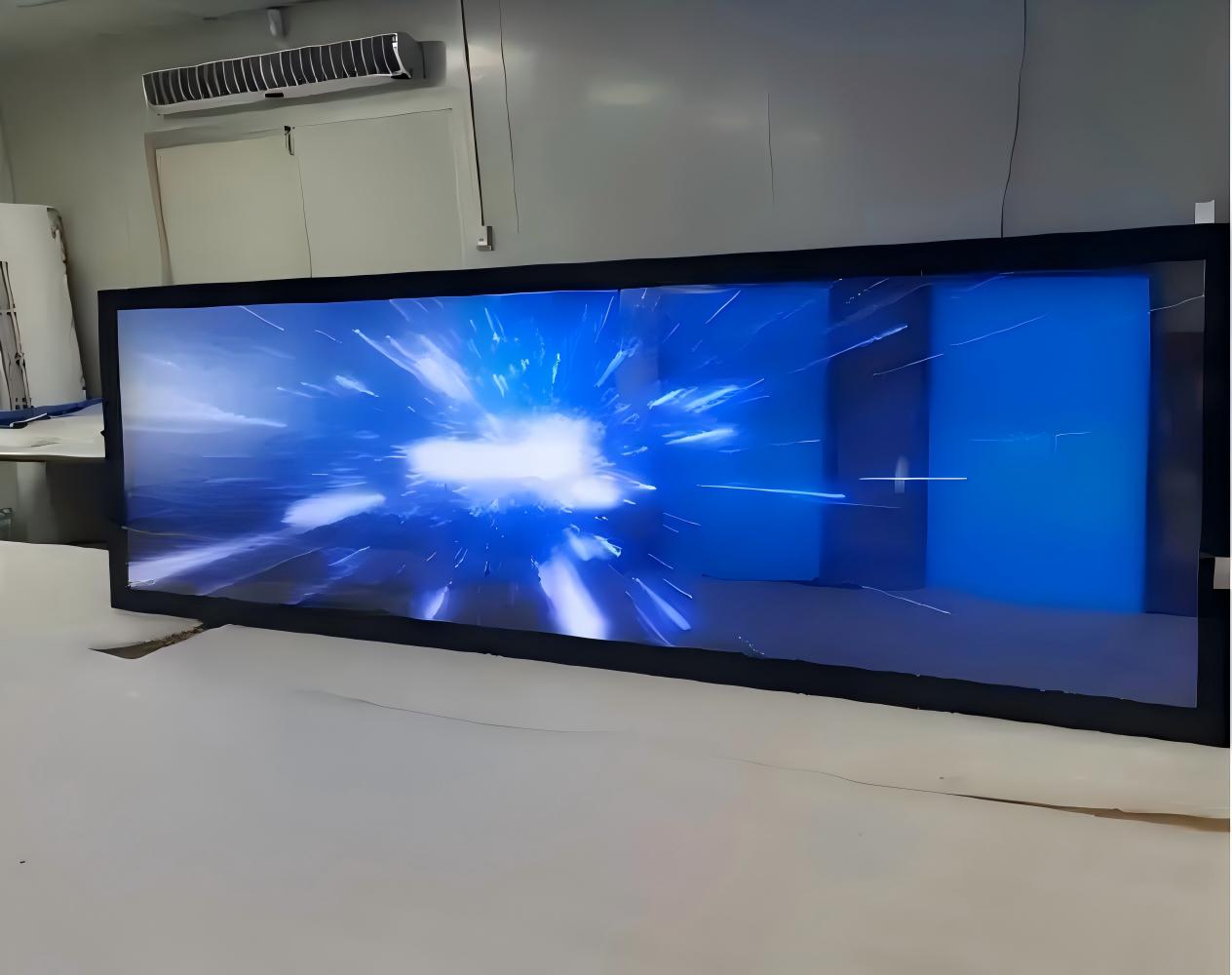
Outdoor digital signage installation presents engineering challenges vastly different from indoor environments. Wind loads, direct solar heat, torrential rain, severe temperature swings, and atmospheric airborne dust can quickly compromise electronic displays if installation design is flawed. Consequently, commercial clients planning outdoor stretched LCD deployments frequently inquire: What are the primary mounting methods, and which one fits our site best?
Stretched bar displays feature an elongated, slim profile that offers exceptional mounting flexibility. Below is an examination of common outdoor mounting techniques, followed by critical engineering considerations applicable to every deployment.
1. Wall-Mounted Installation: The Most Common Method for Solid Structures
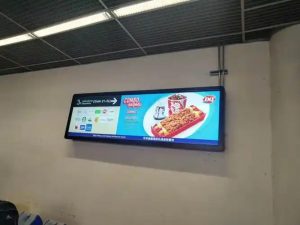
Wall mounting is the most widely utilized approach. The stretched display is anchored directly to architectural exterior walls, store door headers, building facades, or perimeter boundary walls, offering excellent structural stability.
This method is ideal for retail storefront transoms, transit station exterior waiting walls, and pedestrian corridor facades. The narrow vertical height of stretched screens hugs the wall securely without obstructing foot traffic or public clearances.
Prior to installation, thoroughly inspect the structural substrate and load-bearing capacity. Brick masonry, reinforced concrete, glass curtain walls, and lightweight steel frames require distinct anchoring hardware and expansion bolts. If the substrate is uneven, adjustable brackets must be deployed to guarantee a plumb, level finish and facilitate convenient future servicing access.
2. Pole and Column Mounting: Flexible Positioning Without Wall Substrates
When installations lack adjacent structural walls—such as public plazas, parking lots, business park roadways, and scenic tourist walking paths—column or pole mounting secures the display to freestanding pylons or lampposts.
This approach offers tremendous spatial freedom, positioning information right along pedestrian and vehicular sightlines. However, mounting hardware to a pole increases wind resistance surface area, necessitating rigorous wind-load engineering. Subsurface concrete footing depth, anchor cage specifications, and pole wall thickness must be calculated based on local gust velocity ratings by certified structural engineers.
3. Suspended Ceiling/Overhead Hanging: Ideal for Canopies and Trusses
Suspended installation hangs the stretched screen beneath overhead building elements, commonly beneath outdoor passenger shelter roofs, breezeways, transit terminal canopies, and architectural portals.
Because stretched screens are lightweight and narrow, suspending them aloft provides sweeping visibility across crowds without occupying ground or wall surfaces. However, structural safety standards are exacting: hanging rods, stainless-steel safety aircraft cables, and ceiling anchor points must possess high tensile strength ratings. In breezy outdoor spaces, anti-sway lateral tiebacks or mechanical limiters must be installed to prevent pendulum motion.
4. Recessed Flush Embedded Mounting: Harmonious Architectural Integration
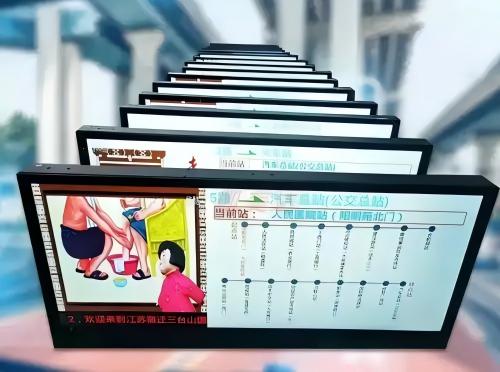
Recessed mounting positions the screen into a pre-engineered architectural wall recess or kiosk frame, aligning the screen face flush with surrounding stone, aluminum cladding, or composite surfaces to appear as an integral part of the building.
Widely favored across upscale commercial boulevards, luxury mall facades, scenic feature walls, and smart bus shelter kiosks, this style delivers an ultra-clean appearance. However, exact aperture tolerances must be coordinated during early architectural drafting. Adequate internal air channels and front-service access latches must be incorporated so maintenance does not require dismantling the facade.
Because ZXTLCD provides custom dimensional engineering, we can design stretched displays tailored precisely to pre-existing architectural apertures.
5. Freestanding Pedestal & Floor-Mounted Display: Self-Contained Portability
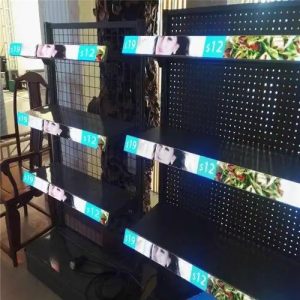
Freestanding installations mount the stretched display upon a heavy, integrated structural base or pedestal, standing independently on the ground without wall or pole attachment—often deployed at storefront entryways, exhibition forecourts, and outdoor pop-up events.
This format offers simple setup and repositioning flexibility. However, for outdoor duty, the pedestal base must feature sufficient ballast or subterranean anchor bolts to resist wind tipping and pedestrian collisions. For permanent outdoor installations, mechanical ground anchoring is strongly recommended.
Crucial Engineering Details for All Outdoor Installations
Waterproof & Dustproof Ingress Protection: Moisture infiltration is the primary hazard for outdoor electronics. Display chassis, gasket seams, and cable glands must feature certified IP ratings. Cable entry points should exit downward with drip loops to prevent rainwater from tracking into the chassis.
Thermal Management & Solar Protection: Direct sunlight induces significant internal heat accumulation. Orient screens away from prolonged perpendicular solar exposure where feasible, and ensure convective airflow channels remain unobstructed around the enclosure.
Anti-Glare Optical Treatment: Intense ambient outdoor daylight creates severe surface glare. Selecting anti-glare (AG) or anti-reflective (AR) surface treatments and tilting the mounting angle minimizes glare patches.
Structural Fastening & Vandal Resistance: Outdoor displays endure persistent vibration, gusts, and potential vandalism. Deploy tamper-resistant security fasteners, lockable service hatches, and impact-resistant tempered protective glass.
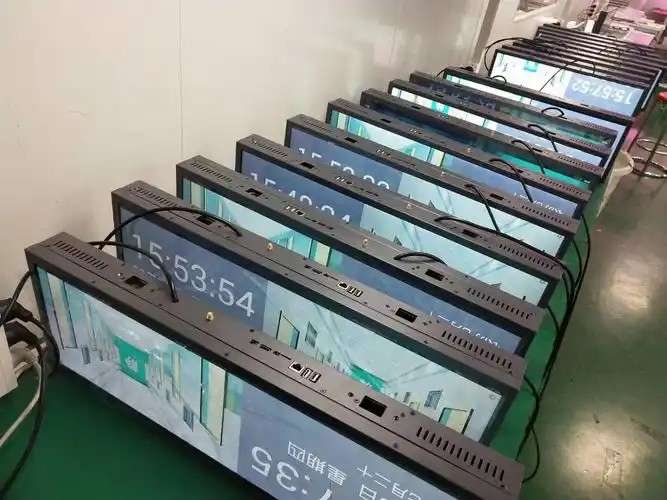
Conduit Wiring & Electrical Grounding: Route power and communication wiring through rigid galvanized or flexible liquid-tight conduit. Electrical infrastructure must incorporate dedicated surge suppression and low-impedance earth grounding compliant with national electrical codes.
Serviceability Clearances: Every display will eventually require inspection or servicing. Ensure brackets provide convenient front- or rear-access mechanisms without requiring complete unit de-installation.
Pre-Installation Planning Checklist
Prior to selecting a mounting configuration, confirm: physical site characteristics (solid wall, open space, or canopy); screen dimensions and overall weight; local historical wind, precipitation, and solar patterns; primary viewing distances and angles; power and data connectivity availability; and future servicing access.
Clear definition of these parameters allows suppliers to deliver precise, turn-key mounting brackets. Outdoor structural installation directly impacts public safety and should always be executed by certified structural contractors.
Frequently Asked Questions (FAQ)
What is the most common outdoor mounting method for stretched bar displays? Wall mounting is the most common due to solid structural backing, straightforward engineering, and cost-efficiency. Where walls are absent, pole mounting or overhead suspension provide versatile alternatives.
Is waterproofing mandatory for outdoor stretched displays? Yes, absolutely. The enclosure, perimeter gaskets, I/O ports, and cable connectors must maintain robust IP ratings to prevent moisture ingress. Verify IP specifications with your manufacturer.
Can screen dimensions be customized to match a specific architectural opening? Yes. ZXTLCD specializes in custom stretched LCD sizing, tailoring dimensions and mounting flanges to match pre-engineered wall cutouts or bespoke enclosures.
Can end-users install outdoor stretched displays independently? It is not advised. Outdoor deployments require structural load calculations, certified waterproofing, and high-voltage electrical safety compliance, which should be handled by professional contractors.
Conclusion
No single outdoor mounting method is universally superior; optimal choice depends entirely on spatial and structural conditions: wall mounting for solid structures, pole mounts for open thoroughfares, suspended hanging beneath canopies, and recessed embedding for flush luxury facades. Ensuring waterproof seals, thermal ventilation, anti-glare optics, secure anchoring, and servicing access guarantees long-term operational success.
ZXTLCD specializes in commercial-grade LCD stretched bar displays. If your project involves outdoor commercial display installations, provide your mounting site conditions, screen dimensions, and environmental parameters for a comprehensive engineering evaluation. Official website: www.stretchedbarlcd.com
Explore Related Commercial Stretched Bar LCD Models
If you are sourcing high-reliability stretched display hardware for this application, consider these featured commercial specifications:
- 37.8 Inch High-Brightness Stretched LCD Display for Store Windows
- 43.8 Inch 4K Touch Stretched LCD Display for Interactive Signage
Need a Custom Screen Size or Turnkey Project Quote?
ZXTLCD provides full ODM/OEM customization for commercial projects—including ultra-wide aspect ratios, sunlight-readable high brightness, custom mounting brackets, and Android/Windows CMS software integration.