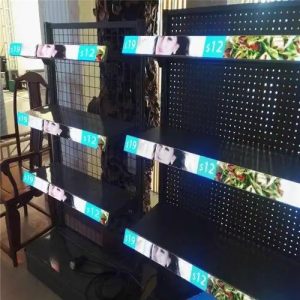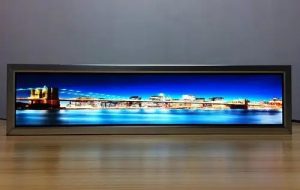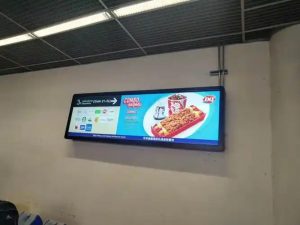

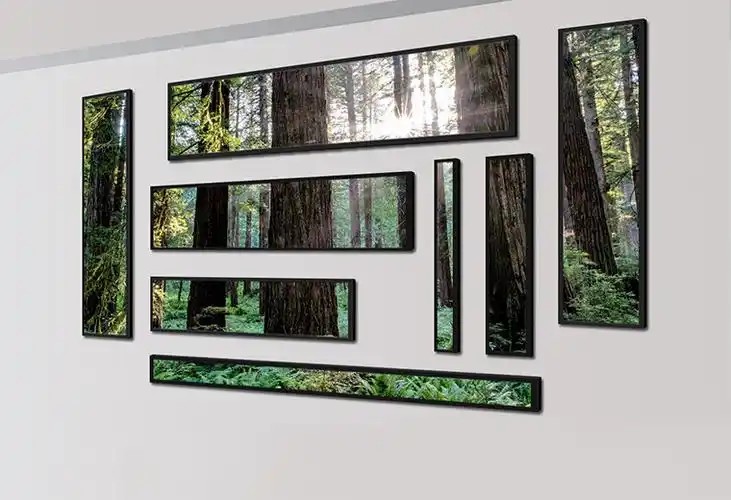
First-time buyers inquiring about stretched bar LCD displays are often surprised: despite having a smaller overall surface area, their unit quote may exceed that of a larger conventional 16:9 commercial screen.
This is not an illusion. Stretched bar displays incorporate unique manufacturing and engineering overheads that do not exist for mass-produced standard panels. However, not all premium pricing is justified. Below is a transparent breakdown of where the cost difference originates and how to maximize purchasing value.
1. Non-Standard Ratios Require Precision Secondary Processing
Global LCD panel fabrication lines are optimized around standardized mass-market aspect ratios (predominantly 16:9 for televisions, monitors, and commercial panels). Stretched bar aspect ratios rarely exist as off-the-shelf raw glass substrates and typically require specialized laser or diamond cutting and edge resealing of standard motherglass modules.
Panel cutting demands high-precision optical equipment. Following the physical cut, polarizers must be reapplied, liquid crystal cell edges resealed, and conductive wiring re-bonded. This intricate process introduces glass loss, lower baseline yields, and scrap rates, all of which are factored into the panel’s manufacturing cost. Standard displays bypass this complex step entirely.
2. Custom Driver Boards, Software Optimization, and Enclosure Tooling
Standard 16:9 displays utilize standardized, mass-produced timing controller (T-Con) boards, driver firmware, and generic metal stampings. Stretched displays feature specialized pixel timings and non-standard EDIDs; driver firmware must be custom-developed to prevent image scaling distortion, and CMS players must be adapted to non-standard resolutions. Furthermore, while generic enclosure molds amortize over hundreds of thousands of standard screens, stretched display chassis and bezels are often fabricated via small-batch precision sheet metal CNC, eliminating economies of scale.
These intensive engineering and validation investments are invisible from the display’s exterior, yet constitute significant real manufacturing overhead.
3. Smaller Production Batches and Lack of Massive Scale Economies

Scale is the dominant determinant in hardware electronics pricing. Standard consumer panels run in volumes of tens of thousands to millions, driving component procurement and surface-mount lines to minimal unit margins. Stretched displays represent specialized commercial hardware ordered in batches of dozens, hundreds, or a few thousand units. Production lines must be reconfigured and components procured in smaller quantities, resulting in higher per-unit overhead amortization.
Consequently, unit quotes for the exact same stretched model can vary significantly based on project order volumes.
4. Rigorous Commercial Burn-In Testing and Technical Support
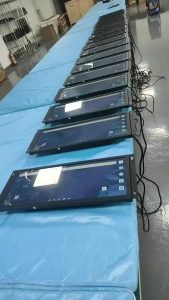
Commercial deployments demand continuous 24/7 duty cycles under challenging thermal and lighting environments. High-quality stretched displays undergo rigorous thermal cycling, structural vibration verification, and extensive factory burn-in testing before shipment. Moreover, custom sizing involves structural drawings, thermal simulations, and feasibility reviews that add engineering labor to smaller production runs.
How to Assess Whether Premium Pricing Is Justified
A higher price tag does not automatically guarantee superior quality. Evaluate suppliers across three fundamental dimensions:
Cost Transparency: Reputable commercial manufacturers clearly articulate the bill of materials, panel grade, and engineering costs. Exercise caution with suppliers who provide vague, lump-sum quotes without technical specifications.
Component Grade and Workmanship: Inquire about panel grading (A-grade commercial vs. recycled/consumer B-grade), operational duty cycle ratings (16/7 vs. 24/7), burn-in duration, and warranty commitments. Abnormally cheap quotes often mask cut consumer-grade panels that suffer rapid backlight decay, color shifting, or edge leakage within months.
Integrated Software and Support: Verify whether the quote includes compatible content management software, remote scheduling licenses, and ongoing technical firmware updates, or if costly third-party integrations will be required later.

Practical Strategies to Optimize Procurement Costs
Select Mature, Standardized Stretched Ratios: Whenever architectural space permits, choose established aspect ratios and sizes that the manufacturer already produces in volume, avoiding bespoke tooling fees. Consolidate Orders: Aggregating project quantities into unified production batches significantly lowers per-unit fabrication costs. Define Specifications Early: Finalize mechanical drawings, mounting designs, and I/O requirements early to avoid costly revision cycles. Eliminate Redundant Add-ons: If interactive touch or multi-zone hardware decoders are unnecessary for your application, opt for streamlined display-only configurations.
Crucially, evaluate Total Cost of Ownership: factor in structural mounting, reliability, power efficiency, and maintenance. Cheap, unstable units that require frequent field service prove vastly more expensive over time.
Frequently Asked Questions (FAQ)
Are stretched LCD displays always more expensive than standard digital displays? Not necessarily. For mature, standard stretched dimensions ordered in moderate-to-large quantities, unit pricing is very competitive. Significant cost premiums occur primarily with low-volume, highly customized, or extreme non-standard cut panels.
Why do quotes vary widely between different manufacturers for the same size? Discrepancies reflect panel grading (original factory cut vs. refurbished consumer glass), backlight quality (nits and lifespan), chassis materials, thermal engineering, and whether professional CMS software and warranty coverage are included.
Are there additional tooling fees for custom dimensions? Tooling and NRE expenses depend on the required dimensions, chassis complexity, and order quantity. Once project requirements are confirmed, manufacturers can provide a clear cost assessment.
Conclusion
The higher cost of stretched bar LCD displays stems from authentic engineering overheads: secondary panel cutting, bespoke driver development, low-volume production runs, and specialized commercial burn-in. Evaluating component grade, structural workmanship, and long-term service support ensures you secure authentic commercial value.
ZXTLCD specializes in commercial-grade LCD stretched bar displays. When requesting a quote, share your spatial dimensions, quantity, and operating environment, and our engineering team will help you select the most cost-effective hardware solution. Official website: www.stretchedbarlcd.com
Explore Related Commercial Stretched Bar LCD Models
If you are sourcing high-reliability stretched display hardware for this application, consider these featured commercial specifications:
- 88 Inch 4K Ultra Wide Stretched Bar LCD Monitor
- 28 Inch Android Stretched LCD Bar for Shelf-Edge Signage
Need a Custom Screen Size or Turnkey Project Quote?
ZXTLCD provides full ODM/OEM customization for commercial projects—including ultra-wide aspect ratios, sunlight-readable high brightness, custom mounting brackets, and Android/Windows CMS software integration.