
Retail business owners consistently face the same operational dilemma: should shelf-edge pricing remain on traditional paper tags, or is it time to upgrade to digital display technology?
There is no one-size-fits-all answer; the optimal choice depends on store footprint, SKU count, and price adjustment frequency. Below is a balanced evaluation of traditional paper tags versus high-definition shelf stretched LCD displays to help you calculate the financial equation for your store.
Paper Price Tags: Inexpensive and Familiar, but Challenging at Scale
Paper price tags have persisted for decades for valid commercial reasons.
They require virtually zero upfront capital expenditure: a standard office printer and perforated paper stock are all that is needed. When prices change, printing and slotting a new slip requires minimal staff training. For small convenience boutiques with few items and stable pricing, paper tags remain functional, and investing heavily in hardware may be unnecessary.
The bottleneck arises as retail operations scale up. During major seasonal sales, manually swapping hundreds or thousands of shelf tags consumes hours of staff labor. As physical fatigue sets in, skipped tags and misplaced slips inevitably occur. When an item marked with a promotional ‘$9.90’ tag rings up at ‘$12.80’ at checkout, angry customers demand an explanation. While isolated incidents can be apologized away, recurring pricing errors erode store credibility.
Furthermore, paper tags accommodate minimal information: item name and price digit fill the entire slip. Essential product details shoppers want—such as origin, certifications, and usage tips—must be communicated verbally or via cluttered cardboard shelf talkers.
HD Shelf Stretched Displays: Centralized Price Control with Rich Information
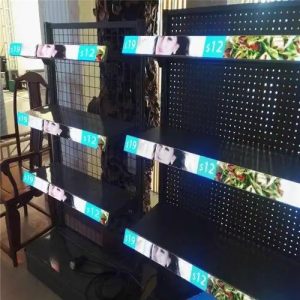
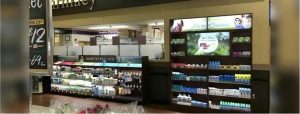
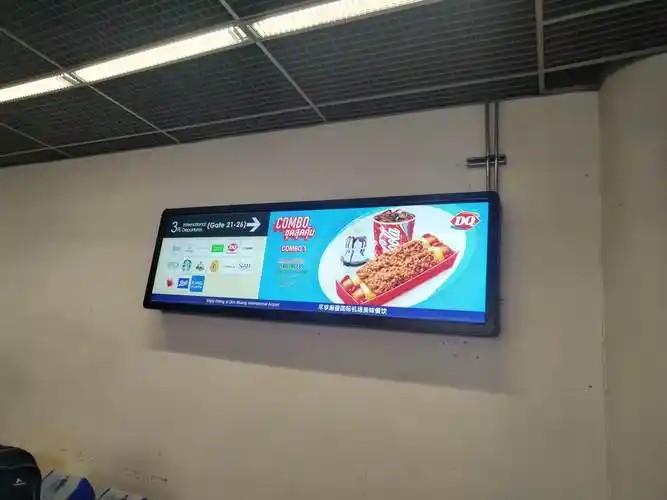
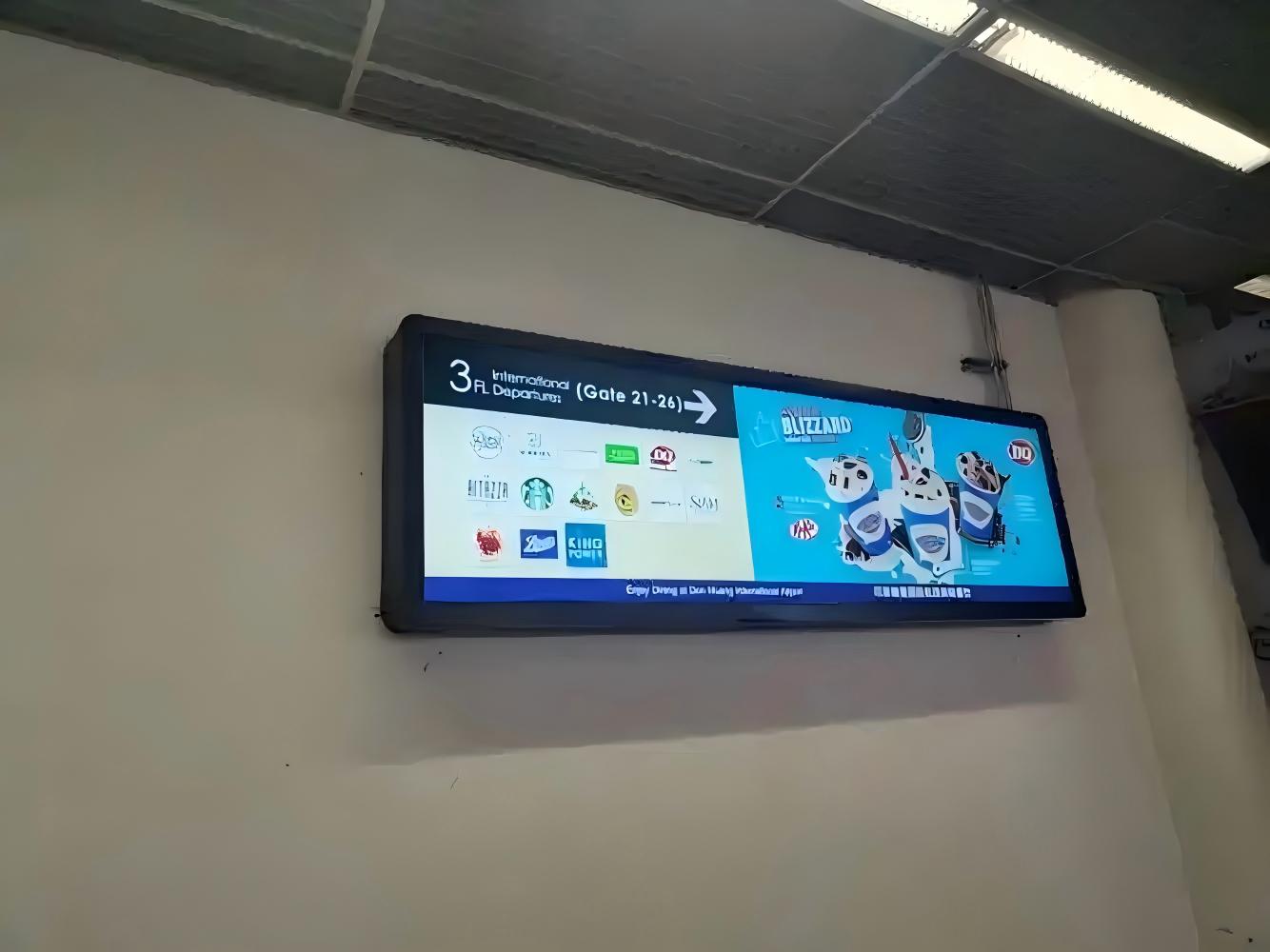
Mounted along retail shelf edges, HD stretched LCD displays link directly to centralized digital management systems. Adjusting a price in the backend immediately updates the corresponding shelf display, eliminating the need for staff to manually replace tags across the store.
For multi-store retail chains, this capability provides decisive operational control. Price adjustments and corporate promotions pushed from headquarters take effect simultaneously across all branches, eliminating compliance lag. Store managers can audit shelf displays from a desktop or tablet without walking aisles.
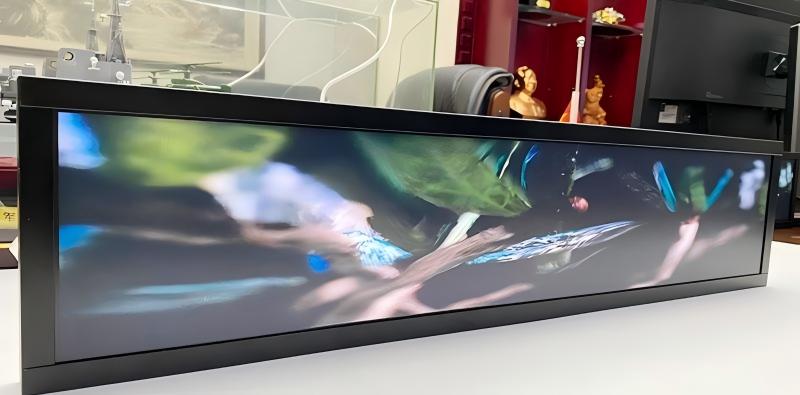
With an expansive digital canvas, the display accommodates far more than bare numbers: product photography, ingredient highlights, promotional copy, and dynamic animations. For example, during a summer beverage promotion, the shelf edge can stream refreshing animated commercials alongside sale prices, capturing shopper attention far better than handwritten tags.
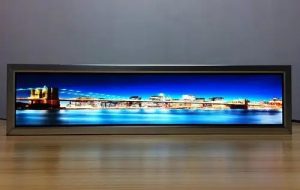
Because retail gondolas vary widely in length, standardized displays often fail to fit. ZXTLCD specializes in bespoke non-standard manufacturing, engineering stretched displays to the exact length and profile of your shelving to ensure a seamless fit.
Promotional Impact: The Decisive Advantage of Stretched Screens
Paper tags merely inform shoppers of an item’s price; stretched displays tell shoppers why they should buy it right now.
During holidays, displays can transition to festive promotional themes; for new product arrivals, dedicated shelf sections can highlight unique brand features; and regional stores can tailor content to local preferences. All adjustments occur within backend software in minutes, eliminating printing and distribution delays that consume marketing momentum.
Higher Initial Investment: Calculating Genuine Long-Term Value
The upfront hardware cost of stretched displays exceeds paper tags—an unavoidable financial reality.
However, true return on investment extends beyond the initial hardware invoice. Review your store’s operating expenses: how many labor hours are spent swapping tags during promotions? How much revenue is lost to customer pricing disputes? How many sales opportunities slip away because promotional notices were delayed?
If these challenges represent persistent operational bottlenecks in your store, the labor savings and sales uplift from digital displays deliver measurable financial returns far sooner than anticipated. Conversely, for a small boutique with several dozen SKUs and stable prices, sticking with paper tags remains entirely sensible.
How Retailers Can Assess When to Transition to Digital Displays
Upgrading to stretched shelf displays is strongly recommended if: you operate multiple chain branches or single stores with thousands of SKUs; promotions and price changes occur frequently; price tagging errors harm customer satisfaction; or management aims to unify visual merchandising from headquarters.
Conversely, continuing with paper tags remains sensible if: your store is compact, product counts are low, pricing is static, or capital budgets are temporarily constrained.
When moving toward procurement, evaluate key criteria: optical clarity and brightness under in-store lighting; API compatibility with your POS/ERP inventory systems; mechanical mounting and servicing accessibility; and custom dimensional engineering. These factors influence real-world performance far more than raw hardware pricing.
Frequently Asked Questions (FAQ)
Are shelf stretched screens suitable for all retail store types? No. Small boutiques with infrequent price changes operate cost-effectively with paper tags. Mid-to-large retail stores and multi-branch chains with frequent promotions realize the greatest ROI from stretched displays.
Can stretched screens be installed on non-standard retail shelves? Yes. ZXTLCD provides custom dimensional engineering tailored to the exact physical dimensions and bracket profiles of your store gondolas.
Are stretched screens restricted to displaying price digits? No. They support rich multimedia—including full-color imagery, promotional copy, brand videos, and dynamic animated tickers—all managed centrally via cloud software.
Conclusion
Paper tags are not inherently flawed; they simply struggle to meet the operational demands of modern, fast-paced retail. High-definition shelf stretched LCD screens resolve the chronic challenges of slow price updates, human errors, and limited marketing communication. Whether the investment makes sense depends on the operational bottlenecks your business faces.
If you are evaluating digital shelf display upgrades, contact ZXTLCD with your shelf dimensions and store operational requirements to determine the optimal solution for your business. Official website: www.stretchedbarlcd.com
Explore Related Commercial Stretched Bar LCD Models
If you are sourcing high-reliability stretched display hardware for this application, consider these featured commercial specifications:
- 28 Inch Android Stretched LCD Bar for Shelf-Edge Signage
- 47.1 Inch Android Stretched Bar LCD Screen for Shelf Edges
Need a Custom Screen Size or Turnkey Project Quote?
ZXTLCD provides full ODM/OEM customization for commercial projects—including ultra-wide aspect ratios, sunlight-readable high brightness, custom mounting brackets, and Android/Windows CMS software integration.