
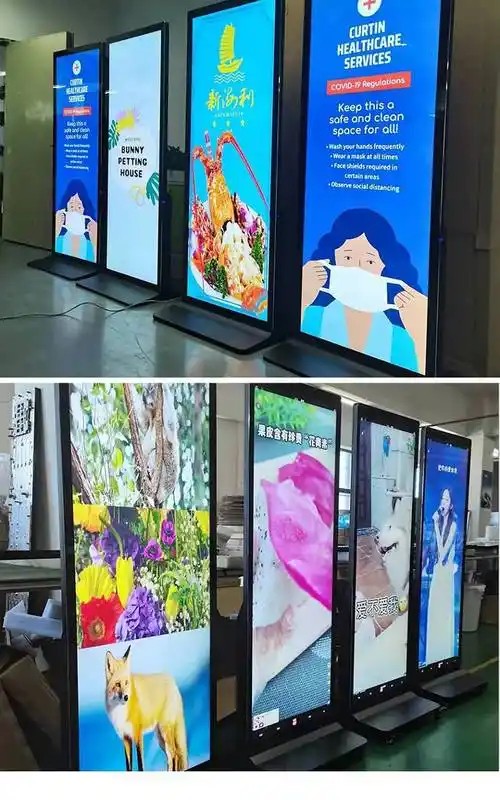
Airports serve as premier gateways for international transit, daily welcoming passengers from diverse cultures and language backgrounds. Characterized by expansive terminals, heavy passenger volumes, and intricate boarding procedures, travelers navigating these hubs rely on one indispensable resource: clear, dependable visual guidance.
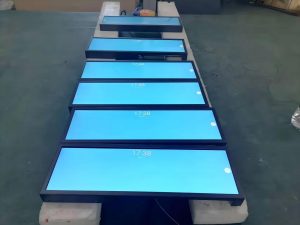
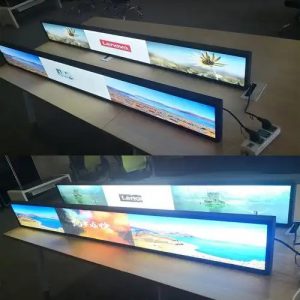
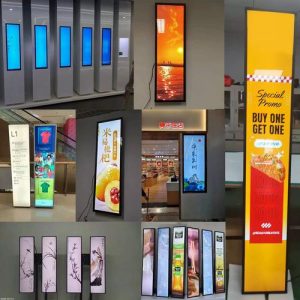
For airport authorities, elevating the passenger journey directly reinforces operational efficiency and global hub prestige. Across modern terminal architectures, stretched LCD displays have become a core visual medium thanks to their space-saving form factor and high-impact presentation.
What Can Stretched Displays Do in Airport Terminals?
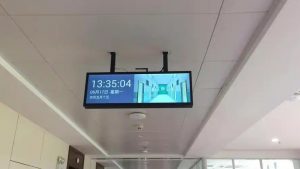
Terminals feature numerous critical touchpoints where passengers require directional confirmation: check-in islands, security queues, customs checkpoints, baggage reclaim belts, and dining/retail corridors. Wall surfaces and counter headers in these zones are frequently elongated and vertically constrained, making stretched displays an ideal fit.
Primarily, they provide dynamic wayfinding—displaying real-time gate guidance and reducing passenger transit delays caused by disorientation.
When equipped with interactive touch overlays, stretched screens support passenger self-service inquiries, including live flight lookup, boarding gate routing, terminal maps, and commercial directory searches. This interactive service significantly elevates passenger satisfaction.
The Core Operational Challenge: Inaccurate Information Causes Traveler Chaos
As digital signage adoption expands, terminal operators face two non-negotiable imperatives:
1. Absolute Accuracy: Every data point displayed must be verified and dependable. An incorrect gate notice can send hundreds of passengers to the wrong concourse, while expired alerts create operational confusion. Airport operations and display systems must integrate tightly to ensure foolproof data publication.
2. Real-Time Timeliness: Airport operations are highly fluid—flight schedules, gate reassignments, weather holds, and boarding statuses change dynamically. System updates must reflect on terminal screens instantly so travelers receive immediate situational awareness.
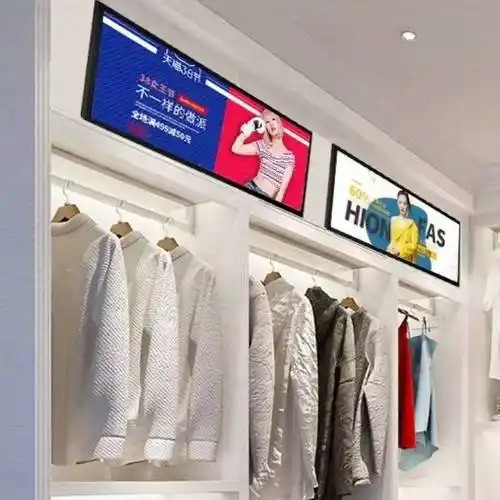
Three Core Measures to Ensure Accuracy and Real-Time Delivery
Measure 1: Establish Strict Data Verification and Centralized CMS Control
Implement rigorous verification protocols ensuring all broadcast information is validated prior to screen distribution.
Simultaneously, establish an integrated central CMS management platform governing all terminal stretched displays. Centralized control ensures that screens across all gates and corridors reflect identical synchronized data, preventing contradictory gate guidance and enforcing enterprise data integrity.
Measure 2: Integrate Live Flight Information Display Systems (FIDS) to Eliminate Manual Lag
Airport data originates from diverse stakeholders: airlines, air traffic control, and ground handling teams. Establish secure API data-sharing protocols connecting operational databases directly with the display network.
Automated data feeds push flight updates directly to stretched displays without human intervention. Removing manual data entry eliminates transcription errors and delivers near-instantaneous broadcast updates across terminals. Integration parameters should be established during initial engineering planning with system suppliers.
Measure 3: Maintain Disciplined Preventive Care and Redundant Contingency Protocols
If hardware fails, the most accurate data cannot reach passengers. Implement disciplined routine maintenance and optical cleaning to guarantee continuous 24/7 display readiness.
Establish rapid contingency response protocols: monitor screen health via automated telemetry, maintain hot-swappable backup displays on-site, and enable rapid hardware failover to prevent critical passenger checkpoints from going dark.
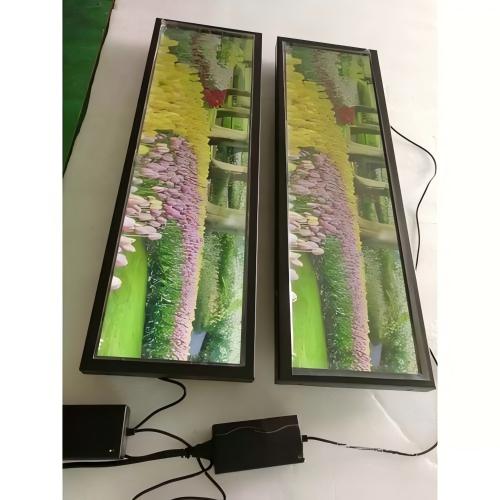
Key Criteria When Specifying Stretched Displays for Airport Projects
When planning airport deployments, prioritize: seamless API interoperability with existing Flight Information Display Systems (FIDS); high-capacity centralized management supporting thousands of endpoints with real-time telemetry; custom dimensional engineering tailored to architectural transoms; and verified industrial 24/7 reliability with rapid local service support.
ZXTLCD provides custom stretched LCD engineering, tailoring screen dimensions and hardware specifications to demanding airport transit requirements.
Frequently Asked Questions (FAQ)
Can flight departure data automatically populate on stretched screens? Yes, via direct API integration between the digital signage CMS and the airport’s central FIDS database. Data protocols should be coordinated during early project planning.
How should airport operators manage sudden display hardware failures? Establish preventive inspection routines, maintain pre-configured hot-swap spare units, and deploy centralized network monitoring to detect and address hardware anomalies instantly.
Do stretched displays support dynamic multi-lingual flight announcements? Yes. Modern digital signage CMS software supports dynamic multi-lingual cycling (such as English, Chinese, and regional languages), essential for international transit hubs.
Conclusion
The operational value of stretched displays in aviation hubs depends entirely on data accuracy and timeliness. Enforcing strict data governance, automating live FIDS feeds, and maintaining disciplined hardware redundancy ensures that every passenger guidance notice remains completely dependable.
ZXTLCD specializes in commercial-grade LCD stretched bar displays. If your airport or public transit hub requires custom dimensions, specialized enclosures, or system integration, contact our engineering team to assess tailored solutions. Official website: www.stretchedbarlcd.com
Explore Related Commercial Stretched Bar LCD Models
If you are sourcing high-reliability stretched display hardware for this application, consider these featured commercial specifications:
- 36.2 Inch Android Stretched LCD Panel for Overhead Information Signage
- 88 Inch 4K Ultra Wide Stretched Bar LCD Monitor
Need a Custom Screen Size or Turnkey Project Quote?
ZXTLCD provides full ODM/OEM customization for commercial projects—including ultra-wide aspect ratios, sunlight-readable high brightness, custom mounting brackets, and Android/Windows CMS software integration.