Description
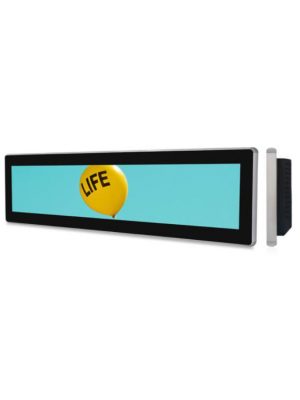
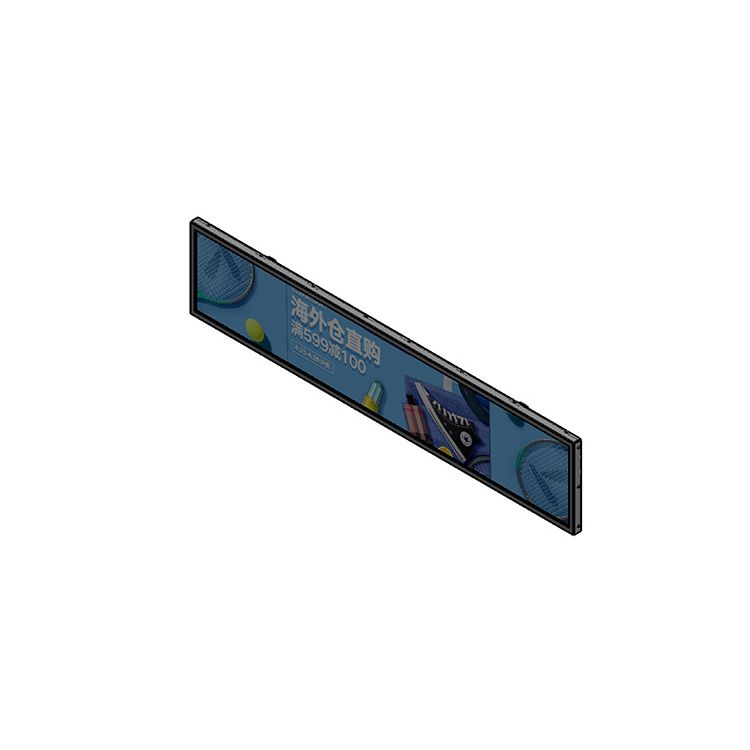
48.8 Inch Android Stretched Bar LCD for Exhibition Displays
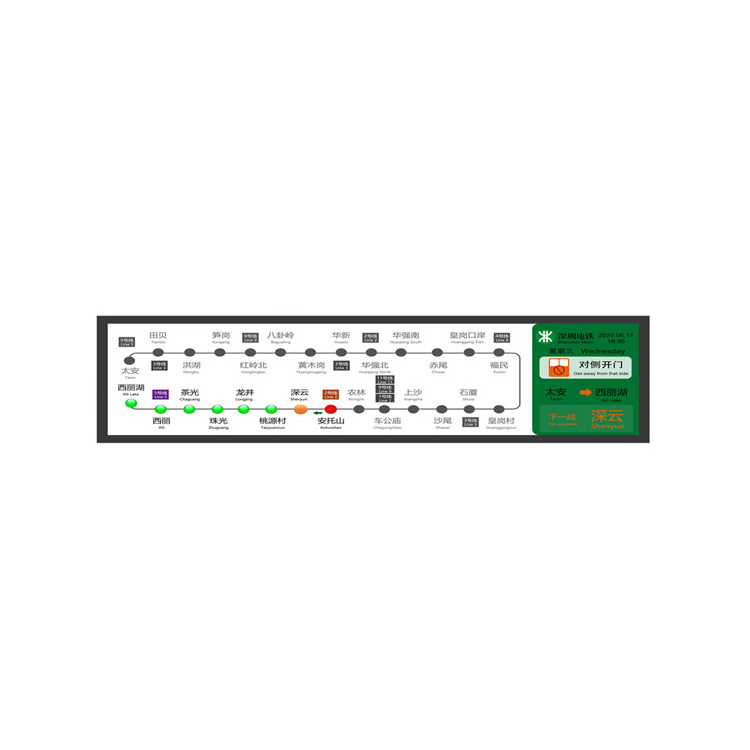
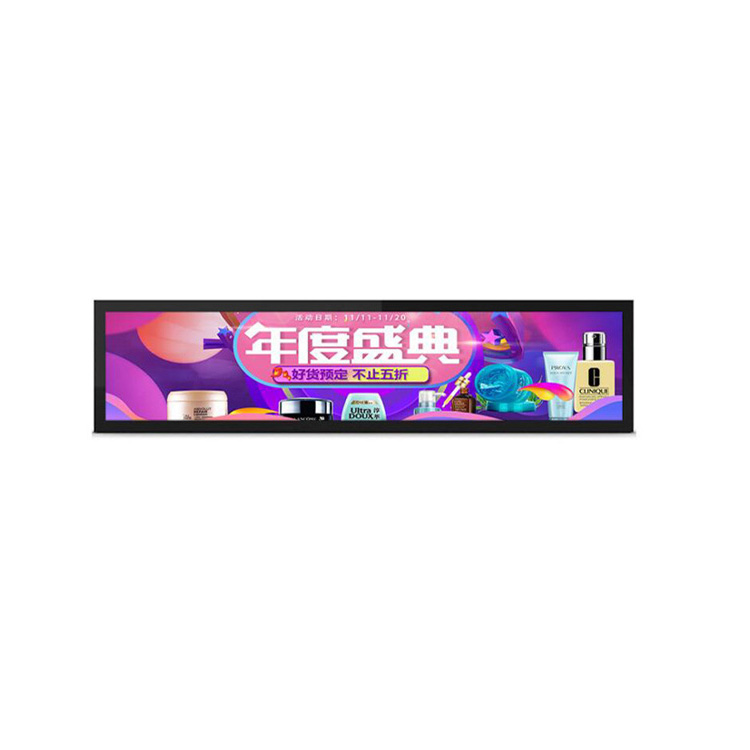
This 48.8-inch ultra-wide screen gives exhibition designers, museums and branded showrooms a practical way to place digital interpretation beside physical objects. Its long, low-profile shape can follow a display case, model, product line or architectural feature without covering the exhibit or consuming the height of a conventional monitor.
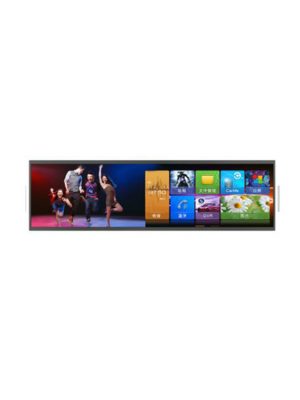
The integrated Android platform supports compatible scheduled media and network updates. This allows the screen to become part of the exhibit rather than appearing as a separate television added after the surrounding structure has been completed.
| The specification | ||
| Model No | Product model | ZXTLCD-BAR488AJSY |
| LCD Screen Panel | Screen size | 48.8″ LCD Panel |
| Active display area | 1209.6(H) X 226(V)mm | |
| Resolution | 3840(V) X 720(H) | |
| Brightness | 500cd/m2 | |
| Contrast ratio | 2000:1 | |
| Display color | 16.7M | |
| Backlight type | WLED | |
| Viewing angles | 89/89/89/89 (Typ.)(CR≥10) | |
| Response time | 9ms | |
| Lifespan | 50000 hours | |
| Monitor PCB Board | CPU | T972 ,Quad core A35 |
| RAM | 2gb | |
| ROM | 8gb EMMC | |
| System | Android 9.0 | |
| Network support | 10M/100M Auto-adjust Gigabit Ethernet , WIFI | |
| RTC real time clock | Support timing on / off function | |
| Interfaces | 1*USB2.0 | |
| 1*OTG USB | ||
| 1*RJ45 | ||
| Video formats | wmv、avi、flv、rm、rmvb、mpeg 、ts、mp4 | |
| Photo formats | BMP、JPEG、PNG、GIF | |
| machine specification | Operating voltage | 100-240V(50/60Hz) |
| Power consumption | ≤60W | |
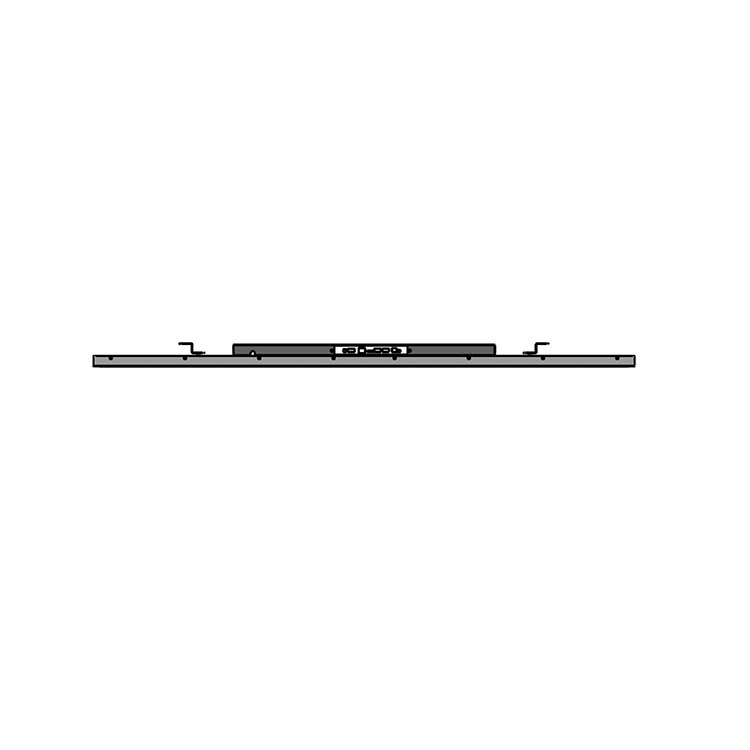
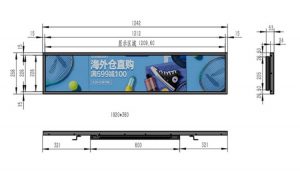
| Product size | 1242(H)X258(V)X53(D)mm | |
| Installation | Embedded, wall-mounted | |
| Apperance material | Metal shell | |
| Net weight | ≤26KG | |
| Surface treatment | Black metal paint | |
| Environmental | Storage Environment | Temperature:-20℃~60℃ |
| Humidity:5%~95% | ||
| Atmospheric Pressure:86kPa~104kPa | ||
| Working Environment | Temperature:-10℃~50℃ | |
| Humidity:10%~85% | ||
| Atmospheric Pressure:86KPa~104KPa | ||
| Packing list | Bar lcd display | 1pcs |
| Power Cable | 1Pcs | |
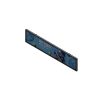
| the design drawing as follows | ||
Stretched Bar LCD for Object-Based Storytelling
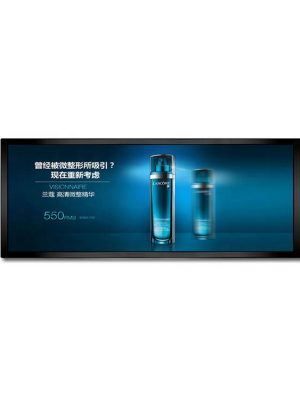
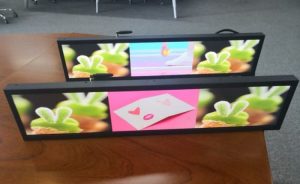
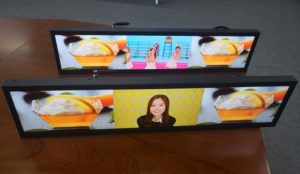
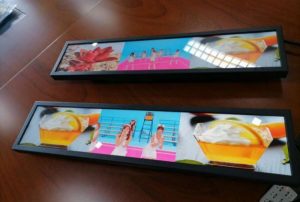
A stretched bar LCD can connect digital information directly with the objects being presented. In a museum case, different areas of the screen may align with artifacts, dates or technical details. In a product showroom, the display can introduce several models in sequence while keeping the physical products visible above or below it.
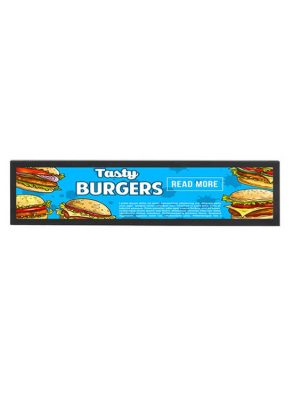
The format encourages concise storytelling. Visitors can follow a timeline from left to right, compare features across several items or watch a panoramic animation that supports the real display. This relationship between screen content and physical objects is difficult to achieve with a standard 16:9 monitor positioned away from the exhibit.
Designing Content for a Panoramic Visitor Experience
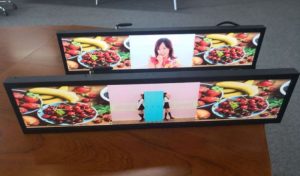
The 3840 × 720 canvas supports detailed wide layouts, but the content should still be easy to understand at a glance. A strong exhibition sequence may begin with one short introduction, continue through three or four visual chapters and finish with a clear takeaway. Large type, restrained animation and consistent spacing keep the information readable as visitors move along the display.
Designers should avoid squeezing a full brochure onto the screen. Supporting text can be revealed in stages, paired with images or linked to a separate interactive station when deeper information is required. Testing the layout at its final physical size helps confirm viewing distance, text scale and alignment with the objects.
Android Content Updates Without a Separate Computer
The built-in Android system can run compatible signage and media applications, reducing the need to mount an external player inside the exhibit. Wi-Fi and Ethernet offer options for network delivery, while local interfaces support installation and maintenance workflows. Scheduled operation can follow museum opening hours, showroom events or temporary exhibition periods.
For traveling exhibitions or repeated store installations, a standardized template can simplify updates. The central content team can prepare approved visual sequences, while local staff change only the information assigned to their venue. The chosen software should be tested for offline playback and reliable recovery after power interruptions.
Embedding the Display into Exhibition Furniture
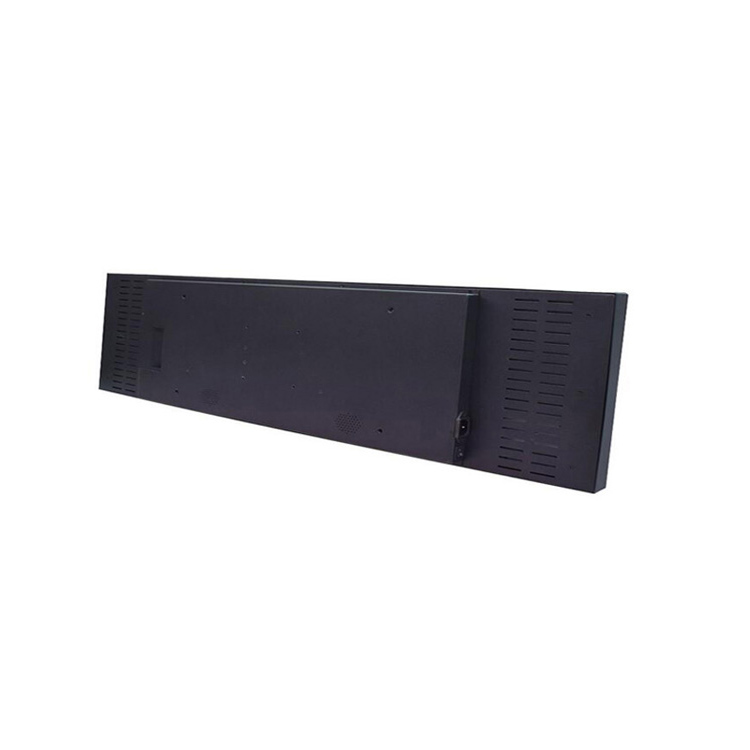
The metal enclosure supports embedded or wall-mounted installation. It may be integrated into a plinth, display-case base, interpretation rail or custom wall feature, provided the structure includes secure support, ventilation and service access. Cables should remain hidden from visitors but accessible to technicians.
Installation teams should coordinate the visible opening and screen position with the graphic designer before fabrication. If the content zones are intended to align with physical products or artifacts, small dimensional errors can weaken the visual relationship. A shared drawing keeps the screen, casework and media layout connected throughout the project.
FAQ for Museum and Showroom Projects
Can the display explain several objects at the same time?
Yes. The wide canvas can be divided into aligned information areas, provided each zone remains clear and the objects have stable positions within the exhibit.
Can it play content without continuous internet access?
Compatible Android software can use locally stored media. The exact offline behavior, scheduling and remote update process depend on the selected application.
Is touch interaction included?
No touch function should be assumed unless it is specified for the selected configuration. Projects requiring visitor interaction should confirm the touch method and software requirements before ordering.
What should an exhibition contractor provide?
Send the casework drawing, viewing distance, mounting position, content source, operating schedule and required quantity. If screen content must align with objects, include the object layout and visible opening dimensions.
Contact us to discuss a 48.8-inch ultra-wide display for a museum case, exhibition feature or branded showroom installation.